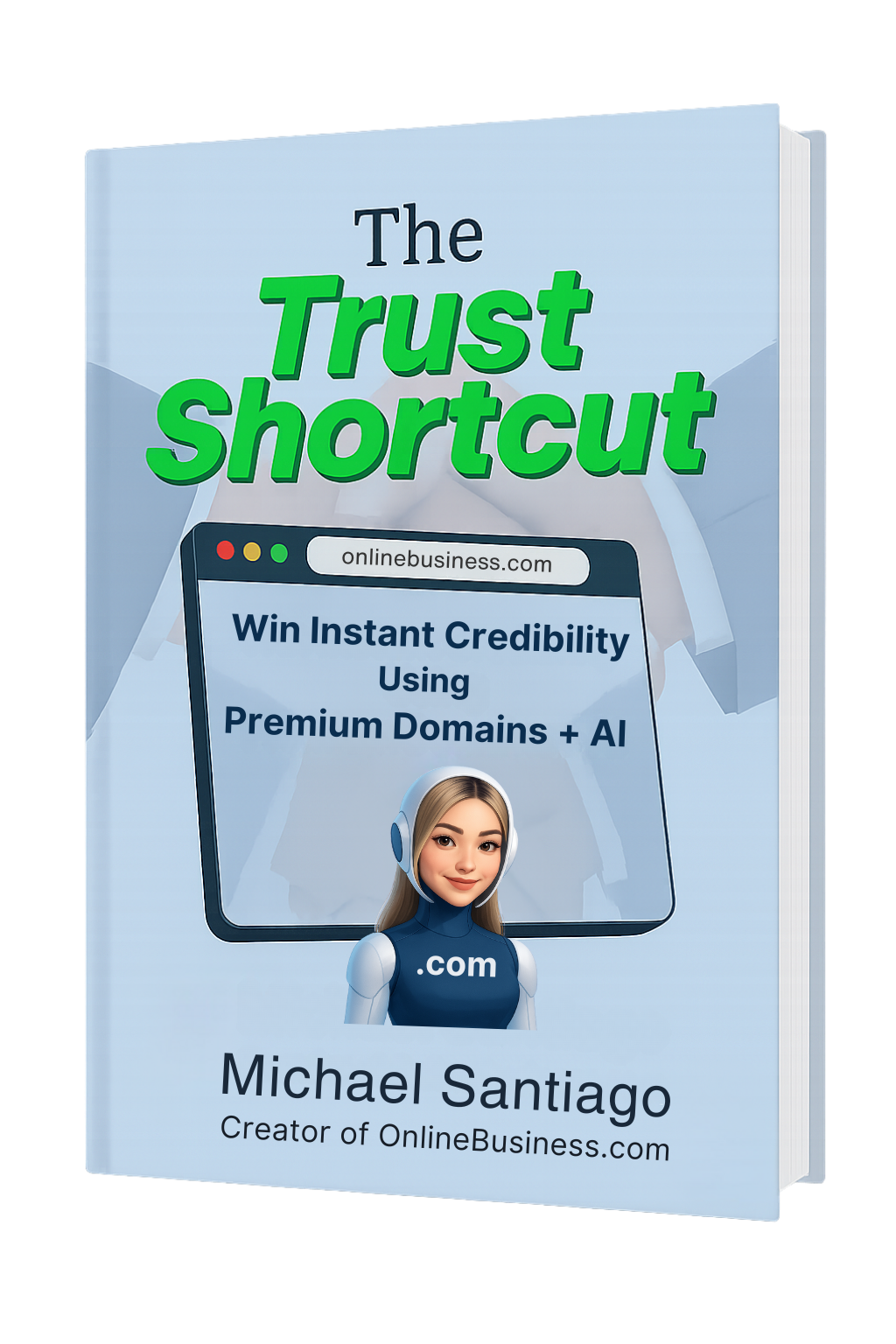
A premium domain can look like a shortcut from the outside.
It is easy to assume that if a company owns the category name, the hard part is already done. The domain is memorable. It is credible. It is easy to explain. It gives the business a head start before a customer reads a headline, clicks a search result, or lands on the homepage.
But after spending years around premium domains and category names, I see it differently.
A premium domain is not a finished brand. It is a responsibility.
I learned that firsthand while leading and co-leading Newswire.com for more than a decade. A great domain can create instant recognition, but it also creates expectations. The name opens the door. The business still has to earn the trust that comes with it.
That is why I find Signage.com so interesting.
I was involved in helping the team acquire the domain, and I still believe it was a strong acquisition at a fair price for a name with true category-defining potential. In my view, this is the kind of domain that carries seven-figure characteristics because it names the category, is instantly memorable, and creates trust potential before a buyer ever sees a page.
But the domain alone is not the business.
The real work is making the company live up to the name.
A Premium Domain Is Not a Finished Brand
Premium domains give businesses real advantages.
They can make a company easier to remember. They can make a brand feel more established. They can reduce friction in conversations with customers, partners, investors, vendors, and the market. When the domain is exact, clean, and category-defining, it can feel like the company already belongs in the space.
But that is only the starting point.
A domain does not automatically create a customer experience. It does not answer buyer questions. It does not prove the company is legitimate. It does not build operational trust. It does not create content depth, reviews, third-party references, product clarity, or a brand people understand.
In some ways, the better the domain, the higher the standard.
When a company owns the category name, customers do not expect a small, confusing, underdeveloped website. They expect the business to understand the category. They expect the buying process to be clear. They expect the company to feel credible. They expect the brand to live up to the name.
That is the privilege and the pressure.
What Newswire.com Taught Me About Category Names
Newswire taught me that category names are powerful, but they are not magic.
A strong domain can help people understand what the business does immediately. It can give the company a clearer starting position in the market. It can support trust because people instinctively recognize the word and understand the category.
But the market does not reward the name forever if the business does not back it up.
The company still has to do the work: build a real product, support customers, develop authority, explain the category, earn mentions, create useful content, and make the brand easier to trust over time.
That is especially true with generic domains.
A generic domain can be an incredible asset, but it can also be underdefined. If the company does not build a clear brand around the name, the domain can remain just a word.
That is the technical and strategic challenge here.
Why I Helped the Team Acquire the Domain
I helped the team acquire the domain because it has the kind of potential that is hard to recreate.
Signage is a large, fragmented market with billions of dollars in annual demand across retail, restaurants, healthcare, offices, franchises, hospitality, commercial properties, and multi-location brands. Every physical business needs to be seen, identified, trusted, and remembered in the real world.
A category-defining domain sits directly on top of that need.
But that is also why the bar is high.
If you own a category-defining domain, the market expects you to think bigger than a normal website. You cannot treat the name like a landing page. You have to build the entity, the brand, the buying experience, the authority, and the trust signals around it.
That is the work now.
The Double-Edged Sword of a Generic Domain
The word signage is powerful because it is generic. It describes the category.
But that same strength creates ambiguity.
To a customer, signage can mean storefront signs, channel letters, monument signs, pylon signs, office signs, wayfinding, window graphics, national sign programs, or something else entirely.
To Google and other search systems, a generic domain can be a website, a brand, a company, a keyword, a product category, a local sign shop, a national provider, or an informational source.
To AI systems, the ambiguity can be even more important. AI tools do not just look at a page and repeat what it says. They try to understand entities, relationships, authority, and context. They need to know what the company is, who is behind it, what it offers, where it is connected, and why it should be trusted as a source.
That is where entity building comes in.
The trick with a generic domain is that the name gives you authority potential, but it does not automatically give you entity clarity. If you do not build the brand around it, the domain can remain a word instead of becoming a company in the eyes of customers, search engines, and AI systems.
What Entity Building Actually Means
Entity building is not a hack. It is not a schema trick. It is not just adding keywords to a page.
Entity building is the work of making a company clearly understood across the web.
For this business, that means making sure the market can understand the relationships:
It is a brand and company, not just a parked domain.
It is a custom business signage provider.
It is connected to real operators and a real team.
It offers products such as channel letters, pylon signs, monument signs, storefront signs, and national sign programs.
It has a Philadelphia business presence.
It is building a more visual buying experience through its AI-powered Design Studio / sign mock-up workflow.
It is being referenced and reinforced beyond its own website.
Those connections matter.
Modern search and AI systems are not only evaluating isolated pages. They are trying to understand what things are, how they relate to other things, and whether those relationships are supported by consistent information.
That is why a generic domain needs a strong entity foundation.
The Pieces of a Strong Entity Foundation
For a category-defining domain, the entity foundation has to be built deliberately.
The first piece is canonical identity.
The business needs consistent public facts: the brand name, website, company description, primary categories, spokesperson, products, location facts, and customer segments. If one profile says one thing, the website says another, and third-party articles describe the company differently, the entity becomes harder to understand.
The second piece is local and profile consistency.
Even a national online brand benefits from a real-world anchor. Accurate business information, location consistency, and profile cleanup help turn a domain into a trusted entity. For this company, the Philadelphia operation matters because it gives the business more than a URL. It gives the brand a real-world point of reference.
The third piece is structured data.
Schema does not create trust by itself, but it can reinforce clean public facts when those facts are accurate. Organization schema, WebSite schema, profile links, product/category signals, and carefully used local or person schema can help search systems connect the dots. But structured data only works when it reflects reality.
The fourth piece is official profile mapping.
The same company should be recognizable across the website, business profiles, social profiles, press mentions, directories, and third-party articles. Those connections help reduce ambiguity around a generic name.
The fifth piece is content that defines the relationship between the brand and the category.
Content is not just traffic capture. For a generic domain, content helps explain what the company actually does. If the business wants to be understood around custom business signs, the website has to answer the questions buyers are actually asking: What type of sign do I need? How do I compare sign companies? What affects cost? What information do I need before requesting a quote? How do I know what the sign will look like?
The sixth piece is third-party corroboration.
A company cannot build its entity only on its own website. Credible mentions, articles, business profiles, and public references help confirm that the brand exists beyond its own domain. They help the market, search systems, and AI systems see the company as a real participant in the category.
And the seventh piece is human proof.
People matter. Operators matter. Experience matters.
The Operator Depth Behind the Business
What makes this opportunity interesting is that the name has real operators behind it.
Hassan Qureshi, CEO, has 10 years of signage experience. He has worked alongside his father, Sami Qureshi, a Partner with 25 years in the signage industry. Along with the broader stakeholder team, including Salman Altaf and brother Usman Altaf, there is operating substance behind the domain.
That matters because a premium domain can create attention, but only real operating knowledge can turn that attention into trust.
Custom signage is not a simple commodity category. A business owner is not just buying a flat product from a shelf. They are making a visible brand decision that may involve materials, lighting, installation, landlord requirements, permits, scale, mounting, site photos, logo files, and real-world visibility.
That kind of buying journey needs more than a clean domain.
It needs expertise.
Why the AI-Powered Design Studio Matters
One reason I think the company has a real opportunity is its AI-powered Design Studio / sign mock-up workflow.
Custom signage is a visual buying decision. A buyer does not only want to know what a sign costs. They want to understand how it might look on a building, whether the size feels right, whether the sign type fits the location, and whether the brand will show up professionally in the real world.
That is hard to solve with a generic product page.
A mockup does not replace engineering, permitting, fabrication, electrical, installation, or code-compliance work. It should not be treated as final production documentation. But it can make the first step more concrete.
It gives buyers a better starting point before quote and production discussions.
It also gives the company a clearer point of differentiation. The brand is not just saying, "we sell signs." It is trying to make custom signage easier to visualize and easier to start.
That is the kind of story a category domain needs.
My Role Now: Making the Domain Live Up to the Business
My role now is closer to CMO than outside consultant.
Through GoPR, my service-with-software agency, I am helping the team shape the marketing, SEO, authority, and entity foundation required to make the business live up to the domain.
That work is not about treating SEO, PR, content, and AI/search visibility as disconnected tactics. It is about helping the brand become easier to find, easier to understand, and easier to trust when business buyers are comparing custom signage providers.
A major part of that work is entity building: making sure the company is consistently understood as a company, a brand, a website, a signage provider, and a source of expertise around custom business signage.
That means aligning the public facts, strengthening the website, building content around the right buyer conversations, cleaning up profiles, reinforcing the brand through credible third-party references, and giving search and AI systems a clearer picture of what the company is.
The goal is not to make the domain look important.
The domain already is important.
The goal is to build enough substance around it that the name feels deserved.
The Lesson for Premium Domain Owners
If you own a premium domain, especially a category-defining generic domain, the work does not end with the acquisition.
That is when the work starts.
The domain can give you attention. It can give you memorability. It can give you trust potential. It can make people assume you have a serious opportunity.
But the market will eventually ask a harder question:
Does the business live up to the name?
For this company, that means building the entity foundation, the content, the product experience, the Design Studio story, the commercial pages, the third-party authority, and the operational trust signals that make the brand feel like it belongs at the center of the category.
That is not easy.
But that is the privilege of owning a premium domain.
A premium domain can open the door. The real work is building a company, customer experience, authority footprint, and entity foundation that makes the name feel deserved.